


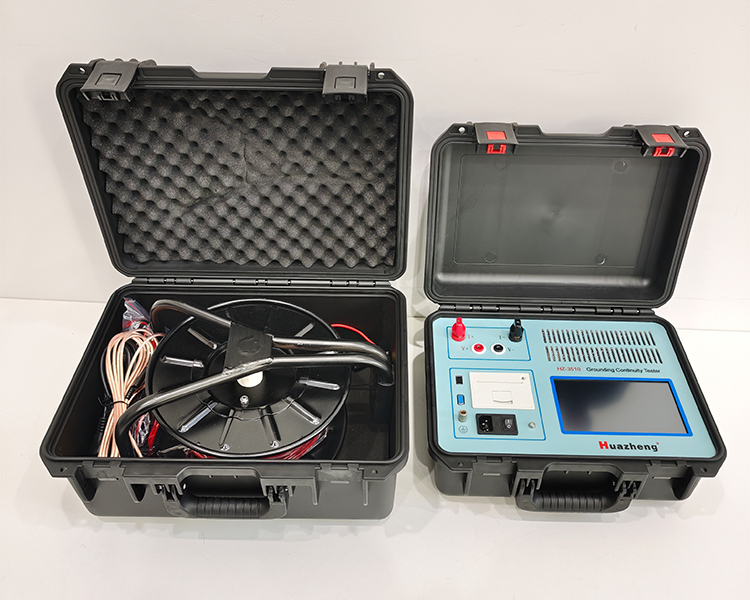
Many substation operation and maintenance personnel often memorize a rule by rote when measuring grounding conductivity on site: 'As long as the instrument reading does not exceed 0.2 Ω, it is considered qualified'. This dogmatic way of judging can easily overlook fatal underground defects in practical engineering. The continuity diagnosis of grounding down conductors is not just about looking at absolute values, but also requires in-depth analysis and judgment based on operational conditions and historical longitudinal data.
The engineering meaning of 0.2 Ω absolute threshold
According to DL/T 596 "Preventive Testing Regulations for Power Equipment" and the operation guidelines for grounding devices of provincial power grid enterprises, the conductivity resistance between the grounding down conductors of each equipment in the substation and the grounding grid main line should not exceed 0.2 Ω under normal circumstances.
This value is based on the theoretical safety upper limit calculated by the power frequency grounding current and lightning current discharge;
In fact, for a modern substation with a good grid and standardized burial depth, the measured values of the down conductors of the vast majority of equipment are only between 10m Ω and 50m Ω (0.01 Ω and 0.05 Ω);
Especially for the main transformer body, neutral point of high-voltage parallel reactors, and independent lightning rods, their qualified red lines are often tightened to within 0.05 Ω (50 milliohms).
The 'hidden disease' that is more dangerous than exceeding the standard: a comparison of cross year mutations
If the conductivity resistance of the down conductor of a 110kV circuit breaker in a substation was measured as 18m Ω two years ago and 25m Ω last year, it suddenly skyrocketed to 150m Ω (0.15 Ω) this year——
In absolute terms, 0.15 Ω is indeed less than the passing line of 0.2 Ω, and some careless testers casually fill in "qualified";
But from the perspective of relative deterioration trend, the resistance value of this node has skyrocketed nearly 6 times within a year! This strongly suggests that the flat iron welding joints deep underground may have undergone physical cracking, or have been partially corroded by electrolyte to the point where only a trace of metal skin remains. Once a system short circuit grounding fault of several tens of kiloamperes occurs, this remaining metal wire will be instantly melted, causing equipment loss and damage!
The Four Laws of Scientific Judgment:
The absolute value must be ≤ 0.2 Ω;
Parallel double down conductors on the same structural column should have a two-point resistance deviation of no more than 20%;
Compared with the initial value of handover acceptance, if the increase exceeds 30%, a warning yellow light should be turned on;
When the resistance value fluctuates abnormally, first remove rust and retest on site. If it remains high, arrange excavation inspection resolutely.